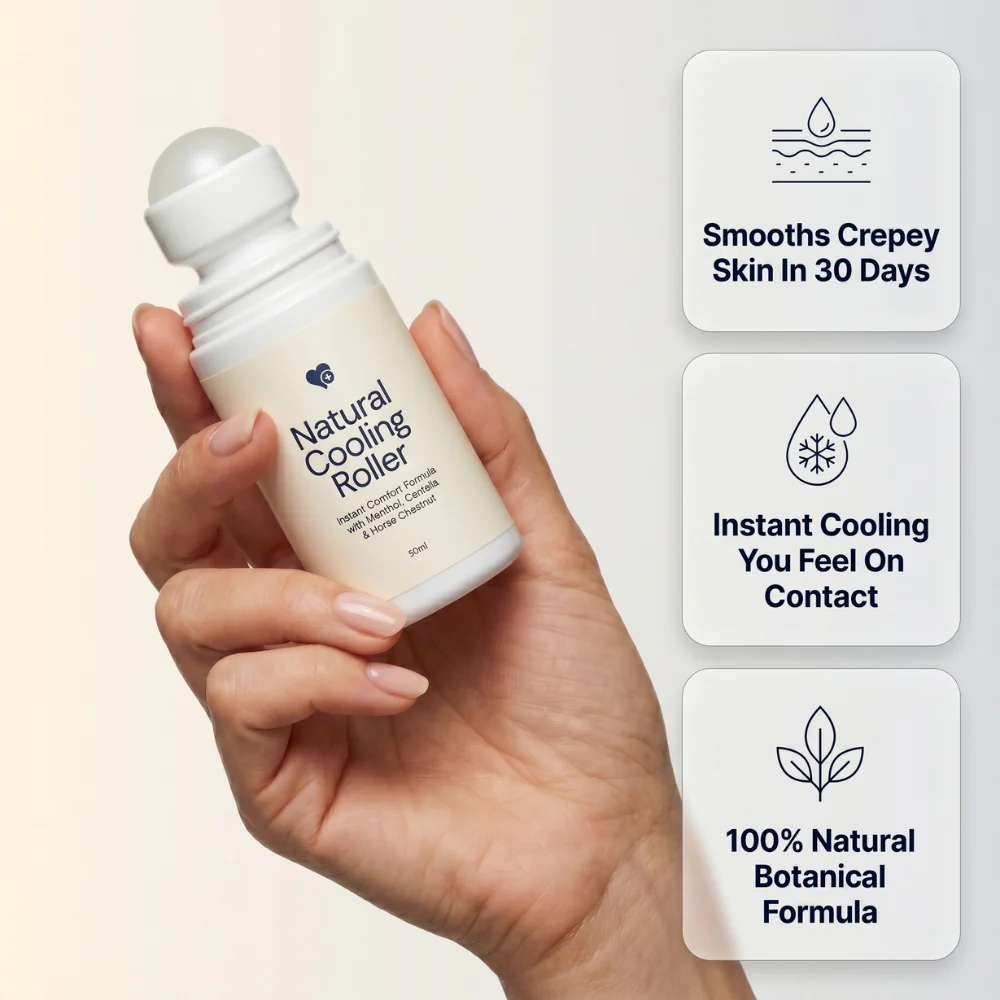

Nurovita Natural Cooling Roller Instant Comfort Formula

Price range: $25.99 through $65.99
Nurovita Natural Cooling Roller Instant Comfort Formula
Nurovita Natural Cooling Roller Instant Comfort Formula delivers cooling daily skin care with a smooth rolling applicator for refreshed comfortable skin
Nurovita Natural Cooling Roller Instant Comfort Formula
Fourth in the pattern, and this one leans harder on medical-sounding narrative than the others. Let me break down what’s real, what’s stretched, and what’s invented.
The invented disease framing:
“Collagen Starvation” in quotes with “Experts Call It” — this is not a recognized dermatological or medical term. Searching medical literature won’t turn it up as a diagnosis. It’s a copywriting device: invent a proprietary name for a real underlying phenomenon (menopausal skin thinning is real), then position your product as the unique solution to the invented name.
The underlying biology is partially accurate — estrogen decline at menopause does reduce collagen production and skin thickness, and this happens fairly rapidly in the first 5 years post-menopause. That’s a real, well-documented phenomenon. But the framing “your collagen cells got starved and are dormant, waiting to be woken up” is not how skin aging works. Fibroblasts don’t go dormant awaiting a botanical wake-up call; they gradually decline in number and function due to hormonal, oxidative, and cumulative UV factors. There’s no “starved cells waiting to be fed” mechanism to reverse with a roller.
The Centella claims:
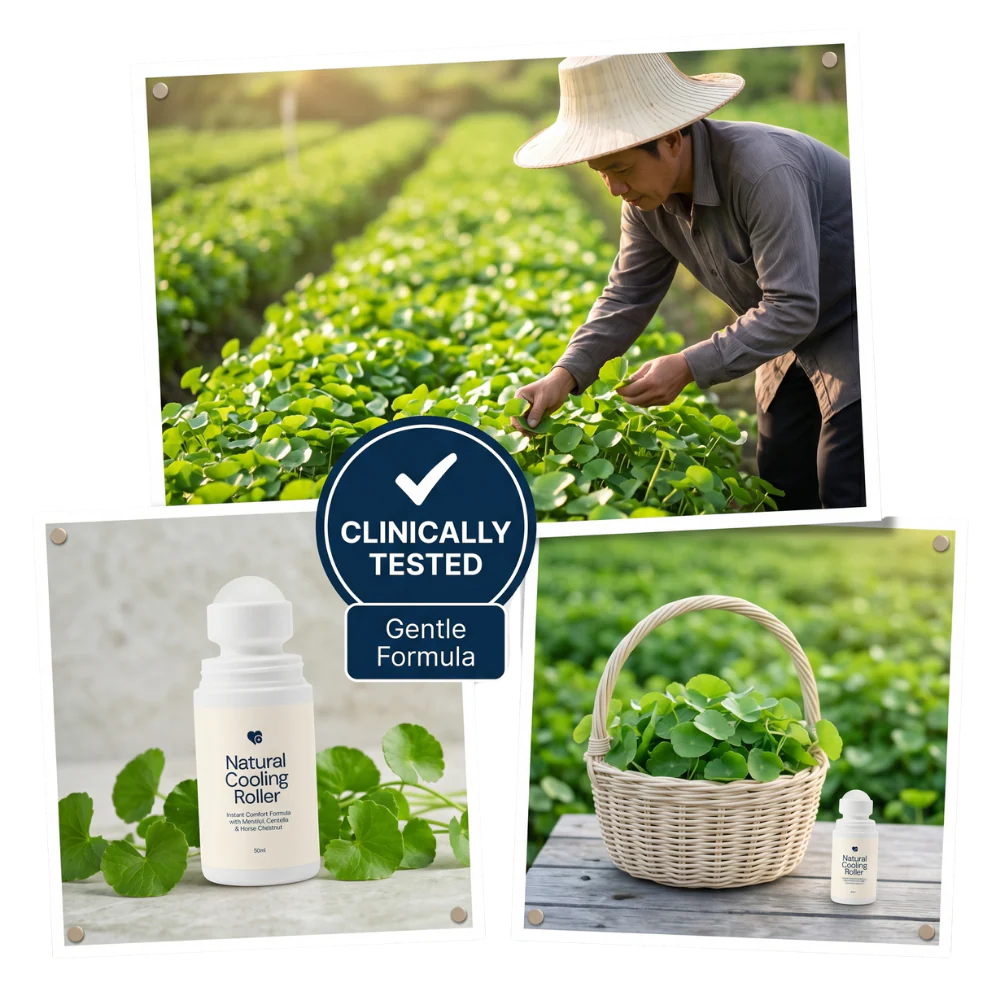
Centella asiatica (gotu kola) is a legitimate botanical with some evidence for wound healing and modest effects on skin. It shows up in the K-beauty world as “cica” for a reason. But:
- “8% clinical concentration” — Centella is typically used at 0.1%–2% in cosmetics. 8% is unusually high, and higher concentration doesn’t linearly equal more effect; there’s no established dose-response curve saying 8% Centella reverses skin thinning.
- “Ten times stronger. Twenty-eight studies.” — Ten times stronger than what? The 28 studies figure is unverifiable and, even if real, “studies exist” doesn’t mean “studies show this reverses menopausal skin thinning at 8% topical concentration.”
- “Wakes dormant collagen cells” — this is not what Centella does mechanistically. It has some evidence for supporting collagen synthesis in wound healing contexts, which is not the same as reversing atrophic post-menopausal skin.
The penetration story:
“Menthol opens tiny channels through your skin so botanicals get underneath” — this is not how menthol works. Menthol activates TRPM8 cold receptors, producing a cooling sensation. It’s a mild counterirritant. It does not “open channels” to drive actives into the deep dermis. The “cool wave = the door opening” line is pure sensory-marketing: you feel something, so the copy tells you that feeling is the mechanism working.
Real transdermal delivery to the deep dermis is genuinely hard — it’s an active area of pharmaceutical research involving microneedles, iontophoresis, liposomes, etc. A roller ball does not accomplish it. Rolling a product on and massaging it in feels active and pleasant, but the physics of skin penetration don’t change based on applicator geometry.
“Supplements just get digested — only ~10% survives” — the comparison table dismissing oral collagen with “digested” is somewhat true (oral collagen is broken into amino acids like any other protein), but the same critique applies more strongly to their own product: topical botanicals don’t reach the deep dermis in meaningful concentrations either. They’re using a valid critique of one competitor category to distract from the same weakness in their own.
The pattern signals (now familiar across all four products):
- Invented proprietary condition name (“Collagen Starvation”) paired with invented proprietary solution
- All testimonials are older women with first-name-plus-last-initial format, verified by an unnamed authority, each targeting a different body-area concern (thighs, arms, hands, butt, knees, weight-loss skin) — this is segmentation copy designed to make sure every reader finds themselves represented
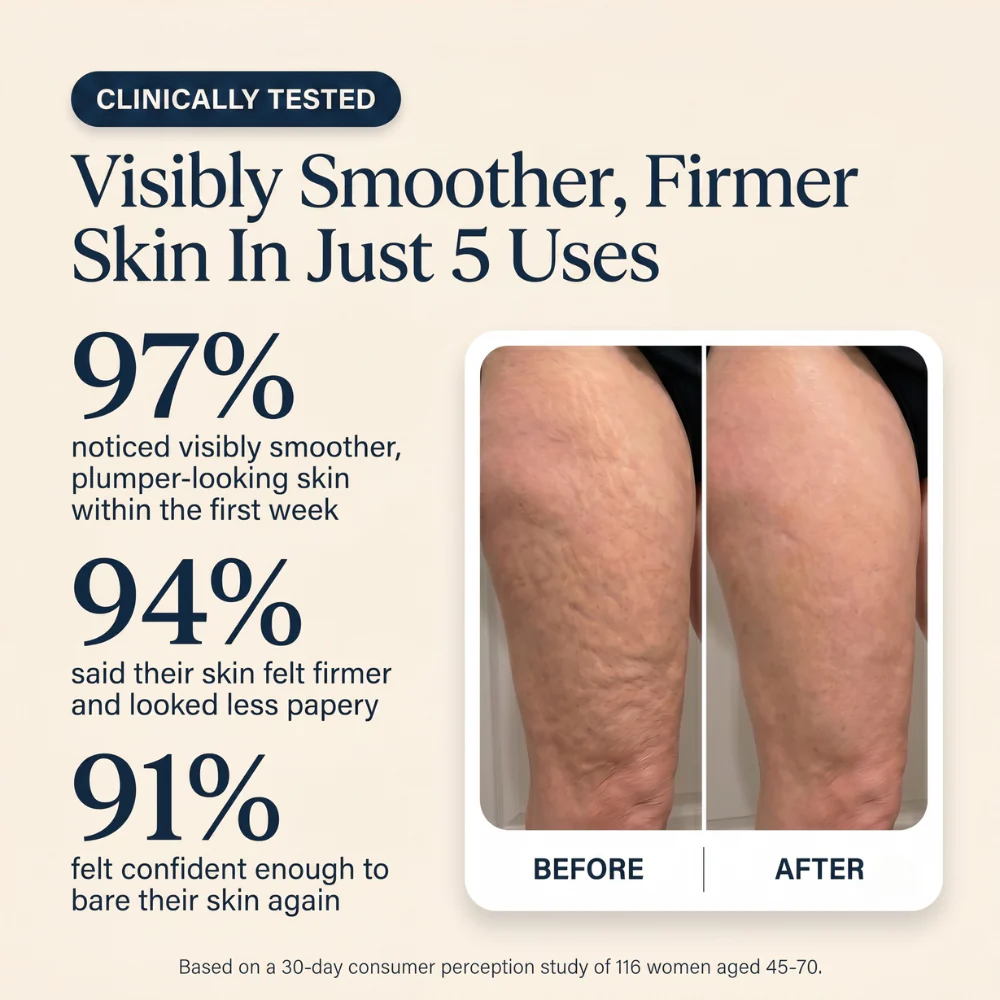
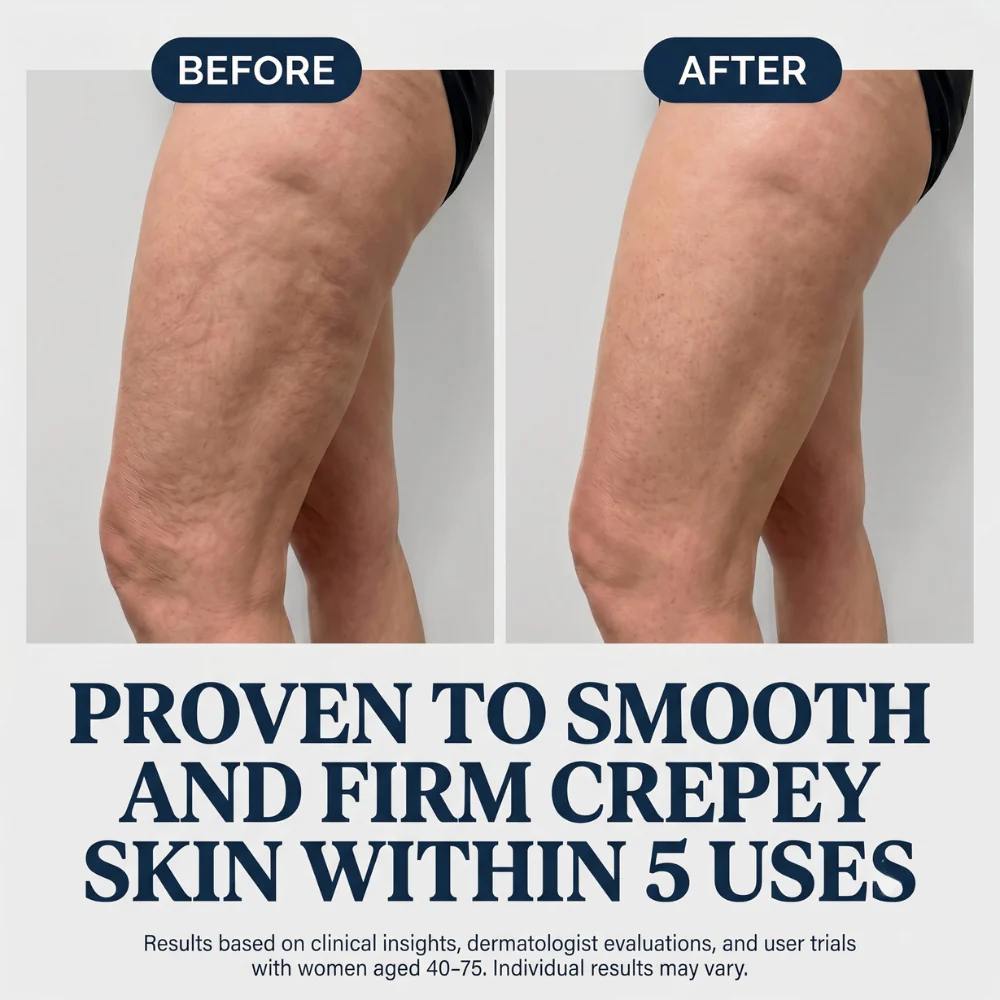
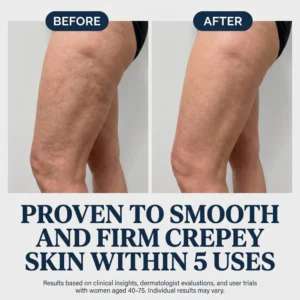
- Before/after photos which you should assume are stock, AI-generated, or from unrelated sources unless proven otherwise
- Autoship enrollment by default (“your selected package will continue to be shipped and billed automatically… unless you choose to skip, pause, cancel”) — this is the biggest new red flag on this page. Buyers who don’t read carefully get enrolled in recurring billing.
- Steep bulk discount tiers (buy 3 get 2 free) to move inventory and lock in months of use before returns become impractical
- “Free gifts” including “Extended Guarantee” — a guarantee shouldn’t be a “gift”; it’s a policy
- Vague credentials (“years of work inside Europe’s health clinics” — which clinics? which work?)
How this ranks against the others:
Nurovita sits between Zyren and the two Luxevéria products. The underlying formula (Centella, menthol, horse chestnut, vitamin E, chamomile, castor oil) is a reasonable, benign cosmetic — it will feel cooling, moisturize the skin, and probably improve the look of skin texture temporarily through hydration. But the specific mechanism story (“wakes dormant fibroblasts, drives actives to the deep dermis, reverses collagen starvation”) is fabricated, and the autoship default makes the purchase more consequential than the price suggests.
The honest version of what this product is: a pleasant, cooling moisturizer with Centella and botanical extracts that will make crepey skin look slightly better while you use it, revert when you stop, and enroll you in monthly billing if you don’t uncheck the box. Not harmful. Not what it claims.
On the real problem (post-menopausal skin thinning): the treatments with actual evidence are topical estrogen (prescription), topical retinoids (over years), and procedures like fractional laser or radiofrequency. Systemic HRT has skin benefits for people who are appropriate candidates. Nothing over-the-counter, roller or otherwise, meaningfully reverses the underlying tissue change — the honest ceiling for a topical is improving how skin looks and feels through hydration and barrier support, which most decent body moisturizers do.
You’ve now shown me four in a row with the same fingerprints. What’s the context — are you cataloging these for something, or is there a specific decision behind the research? I’ll be more useful if I know what you’re actually working on.
| Bundle & Save | Buy 1, Buy 2, Buy 3 |
|---|